Saskatoon homeowners get a brief window every spring when the snow is gone but the bugs haven't fully woken up yet, usually mid-April through early May. That window is the most valuable few weeks of the entire pest control year. What you do (or don't do) right now determines how many ants, spiders, and mosquitoes you'll be dealing with all summer.
Here's what's coming, when to expect it, and what you can do this month to stay ahead of it.
When Do Ants Come Out in Saskatoon?
When ants arrive: Late April to mid-May, depending on the year. Pavement ants and carpenter ants are the two species you'll see most often in Saskatoon homes.
How to Tell Which Ants Are Which
Pavement ants leave small piles of sand along driveways, foundations, and patio joints. That's the colony excavating its tunnel system underneath.
Carpenter ants leave frass: small piles of fine, sawdust-like wood shavings near baseboards, window frames, and deck supports. Frass is the giveaway. If you see wood shavings, you have a carpenter ant problem in damp wood somewhere.
Where the colony actually is: This is the part most homeowners get wrong. The vast majority of carpenter and pavement ant colonies in Saskatoon are outside, under decks, in tree stumps, in soil along the foundation. The trail you see in the kitchen is a foraging route from an outdoor nest.
The pheromone trail problem: Once ants establish a path into your home, they leave a chemical pheromone trail that other ants follow. Those trails can persist for years - even after you've sealed entry points or removed the colony, leftover scent acts as a "neon highway" guiding new ants right back in. That's why DIY treatments often work for a week and then the ants come back.
Why over-the-counter sprays often make ant problems worse: Most retail ant sprays are too strong. They kill ants on contact, before they can carry bait back to the colony. Worse, the colony detects the threat and splinters, sending out scouts to find new entry points and form new trails. You can spend a summer chasing ants from one spot to another while the underlying colony is untouched.
Spring Pest Prep Checklist in Saskatchewan
- Walk the foundation and seal cracks with caulk
- Trim tree branches and shrubs touching the house - these are ant highways
- Check window and door seals
- Clear away last year's mulch within 12 inches of the foundation
- Identify any soft, damp wood (carpenter ant target zones) and fix the moisture issue
- Keep firewood piles at least 20 feet from the house: firewood attracts carpenter ants and other wood-dwelling insects
- Wipe down kitchen counters and clean barbecue grills at the end of every weekend
If you saw ants indoors last year, schedule a perimeter treatment now. A pest control pro will typically treat inside the house first. The goal is to drive ants out before sealing entry points, then handle the exterior nest. Killing the colony at the source in May is far more effective than chasing trails in July.
Spiders in Saskatoon: Always There, More Visible in Summer
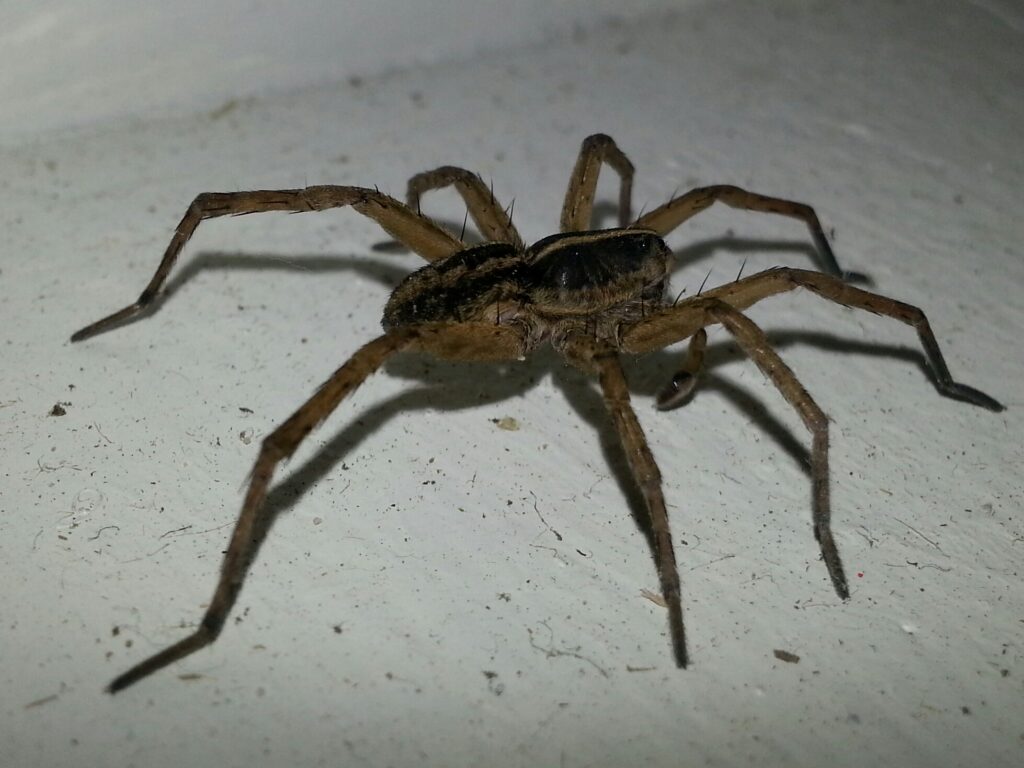
When do spiders arrive: Most spiders in Saskatoon are active by late May, peaking in August and September. The most common species are house spiders, wolf spiders, and nursery web spiders.
Traces of spiders: Webs in basement corners, garages, sheds, window wells, and around exterior lights. Wolf spiders don't build webs. They hunt at ground level, so you'll see them running across floors instead.
Why spiders show up: Spiders are predators. They follow the food. If your house has flies, mosquitoes, moths, earwigs, silverfish, or millipedes, spiders will appear because the food is there. Spider control is mostly food-source control.
How Professional Spider Treatment Works
A proper Truly Nolen spider treatment consists of two passes:
1. Web wipe: Using a web wipe and pole, the technician physically removes every visible web from soffit fascia, gas lines, door and window frames, railings, decks, and exterior corners. Web removal alone makes a huge difference because spiders use existing web anchor points.
2. Crack and crevice spray: Once the webs are down, the same areas get a targeted residual spray - soffits, around water and gas line entries, window frames, deck supports, and other entry points.
Most homes get two treatments per year - first in May/June when populations are establishing, second in July/August when populations peak. Reapplication is available if needed.
DIY tip: A broom is the single most effective spider tool you own. Knock down webs along eaves, decks, and window wells every couple of weeks. Without web anchor points, spiders relocate.
Spring Pest Prep Checklist in Saskatoon
- Replace bright white outdoor bulbs with yellow "bug lights": fewer flying insects, fewer spiders
- Knock down old webs around eaves, decks, and window wells
- Vacuum corners, basements, and storage areas
- Seal gaps around windows, doors, and dryer vents
- Reduce clutter in garages and sheds: spiders love stacked boxes and unused corners
- Maintain proper indoor humidity (a dehumidifier in basements helps): drier air reduces silverfish, earwigs, and millipedes, which in turn reduces the centipedes that hunt them.
Mosquito Season in Saskatchewan: Saskatoon's Signature Summer Pest
When do mosquitoes arrive: First major hatch usually mid-to-late May after the spring melt. Peak season runs June through August, with another spike after heavy summer rain.
Why Saskatoon is a mosquito hot zone: Standing water from snowmelt, the South Saskatchewan River, and the city's many sloughs and retention ponds give mosquitoes plenty of breeding habitat.
Realistic expectations: No mosquito program, whether DIY or professional, can eliminate 100% of mosquitoes. Mosquitoes fly long distances, and any breeding habitat within several blocks of your yard contributes to the population. The honest goal is reduction not elimination.
How a Professional Mosquito Program Works
A proper Truly Nolen mosquito program targets the surfaces where mosquitoes rest not where they fly. Mosquitoes spend most of their lives parked on shaded vertical surfaces: the underside of decks, fence lines, dense shrubs, and the lower trunks of trees. Treatment focuses on those resting zones.
A typical mosquito program is four treatments per year, spaced through the season and timed around weather (rain washes treatments off; hot dry stretches make them last longer).
Spring Mosquito Prep Checklist
- Walk your yard and dump anything holding standing water: old tires, planters, kids' toys, tarps, clogged gutters, wheelbarrows
- Refresh birdbath water every 3-4 days
- Treat or aerate any decorative water features
- Check that downspouts drain at least 6 feet from the foundation
- Trim tall grass and dense shrubs where mosquitoes rest during the day
Why Spring Prep Beats Summer Panic with Mosquitoes
The single biggest pattern we see in Saskatoon: homeowners call us in July when they're already overwhelmed with mosquitoes. By that point the ant colony has 10,000 workers, the spider population has multiplied through 2–3 generations, and the mosquito breeding sites have produced wave after wave.
A single perimeter treatment in late April or early May is dramatically more effective than the same treatment in July, because you're hitting populations when they're small and concentrated near the foundation.
Book a Springtime Pest Inspection
Truly Nolen Saskatoon offers a spring perimeter inspection and treatment package designed for our local pest mix - ants, spiders, mosquitoes, and our summer maple bug surge. Many homeowners combine it with our Four Seasons program, which covers ants, rodents, and most common pests across the year at a better overall value than one-off treatments.
Contact us now to book a spring pest inspection near you in Saskatoon.
Related Posts
The Correct Way to Handle Canadian Spiders

Avoiding Summer Pests in Canada