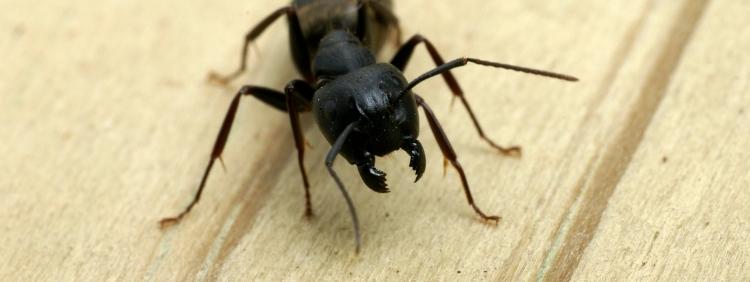
 Every animal has its place on the food chain, and ants are no exception. Carpenter ants are omnivorous and spend a great deal of time foraging for food to feed not only themselves but the colony as a whole. Ants have many natural predators as well. Some are much larger creatures, such as birds, reptiles, and mammals, but others are fellow arthropods.
Is it possible to introduce ant predators onto your property to control carpenter ants? It may be possible, but that doesn't necessarily mean it is a good idea. It can work on a large scale under the supervision of experts, but if you try it on a small scale, you may find that the predator you introduce turns out to be at least as big a nuisance as the ants themselves. Nevertheless, it is interesting to learn more about the predators of the ant.
Every animal has its place on the food chain, and ants are no exception. Carpenter ants are omnivorous and spend a great deal of time foraging for food to feed not only themselves but the colony as a whole. Ants have many natural predators as well. Some are much larger creatures, such as birds, reptiles, and mammals, but others are fellow arthropods.
Is it possible to introduce ant predators onto your property to control carpenter ants? It may be possible, but that doesn't necessarily mean it is a good idea. It can work on a large scale under the supervision of experts, but if you try it on a small scale, you may find that the predator you introduce turns out to be at least as big a nuisance as the ants themselves. Nevertheless, it is interesting to learn more about the predators of the ant.
1. Wasps
Wasps do not only use their stinging capability for defending themselves and their home. They also use it to hunt for other insects, including ants. Their venom either kills or immobilizes the ant, and they can then carry it back to the nest to feed themselves and their offspring. There are at least one species of wasp that doesn't attack the ants directly but can nevertheless be devastating to the population. It is called the eucharitid wasp, and it can decimate the ant colony by redirecting resources. The wasps leave their larvae near ant colonies where they can hitch a ride back to the nest on the ants as they pass by. Once in the nest, the larvae convince the worker ants to feed them by emitting a scent that mimics that produced by ant larvae. Confused by the pheromone signals they are receiving, the worker ants feed the wasp larvae and inadvertently neglect the ant larvae in the process.2. Other Parasites
Eucharitid wasp larvae can be considered parasites, but they are not the only parasites that feed on ants. Phorid flies take a more direct approach to their parasitism. They lay their eggs directly in the bodies of the ants. As the larvae hatch, they literally consume the ant from the inside out, which eventually leads to the ant's death from decapitation. It sounds like something out of a horror movie, which may be why only governments can purchase phorid flies for ant control purposes, not individuals. Furthermore, phorid flies feed primarily on fire ants, not carpenter ants.3. Spiders
Spiders are often confused with insects but are actually arachnids. While insects such as ants have six legs, arachnids such as spiders have eight. There are other differences between the two, but the number of legs is the most obvious to the casual observer. Spiders feed on insects such as ants and generally catch them by spinning webs. The threads of the web are covered with a sticky substance that ensnares the insect. Most species of spiders in Ontario are harmless, but a few have venom strong enough to cause illness, if not death. Spiders can also cause a nuisance by the webs they leave behind.4. Other Ants
Different species of ants do not always get along and may even prey on one another. There are one species of a parasitic ant that incapacitates, sterilizes, and replaces the queen of the host colony. The workers of the colony unwittingly care for the new queen and her offspring as they would their own queen. Sometimes the conflict between ant species is more like a turf war in which two different colonies compete with one another for resources, sometimes violently. In theory, introducing ant predators sounds like a natural means of pest control, but it may not be effective. You're better off with professional carpenter ant removal in Thornhill from Truly Nolen.Related Posts
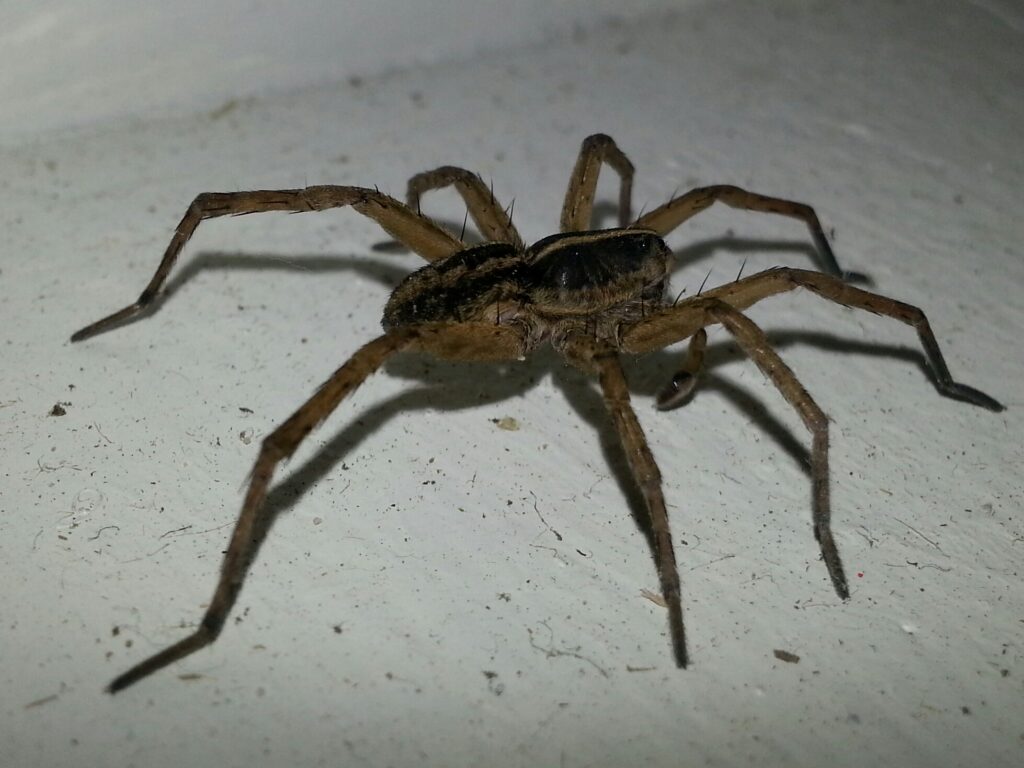
The Correct Way to Handle Canadian Spiders
Ideally, Canadian residents would prefer to never have to deal with any pests – it’s just better that way. Unfortunately, pests are pretty much everywhere, so dealing with them at some point in time is a reality. But if you had the opportunity to …

Avoiding Summer Pests in Canada
Warm weather and the long-awaited start of summer gives any Canadian a reason to celebrate. But the hot and humid summer weather also creates an ideal paradise for annoying pests. Following a few simple prevention-based tips can keep common pests …
Truly Nolen Canada Supports Crime Stoppers of Grey Bruce Inc. At Local Charity Golf Tournament
Dear Ms. Reinwald, On behalf of the Board of Directors of Crime Stoppers of Grey Bruce and the tournament organizers, I would like to express our sincere gratitude to you for donating a pest-proof mattress cover as an auction item toward our 22nd …